Equity, Diversity, and Inclusion

On this page: 

Our Commitment

Equity has long been a core value and part of The RP Group’s work, and our understanding of what it means to be an equitable organization has evolved. Since 2021, The RP Group’s Board of Directors and staff have more explicitly centered equity, diversity, and inclusion within our work. Racial identity is frequently the most salient indicator of advantage and oppression within our system. To advance equity broadly, our work must begin with race and acknowledge how it intersects or interacts with other characteristics to produce inequitable experiences and outcomes. As institutional research, planning, and effectiveness (IRPE) professionals, we have the privilege and responsibility to go beyond identifying gaps in students’ outcomes and to use data to inform actions that eliminate these gaps.

We are committed to offering support and insights into how we believe The RP Group and IRPE field must change to help students succeed.   Just as our Mission, Vision, and Core Values guide our approach to research, professional development, and representation, we need to affirmatively and publicly articulate our commitment to equity, diversity, and inclusion.

The RP Group’s Commitment to Equity, Diversity, and Inclusion

The RP Group recognizes it is not enough to promote equity, diversity, and inclusion; we must proactively work to oppose racial inequity and lead social justice within the educational system. To drive systemic change and advance equity for racially and other minoritized groups, The RP Group must capitalize on its unique position as both a provider of research and professional development services and as a representative body for IRPE professionals.

We recognize that we are all in different places in our journeys. The RP Group’s positions and documents will continue to evolve as we grow personally and professionally as an organization and as individuals. 
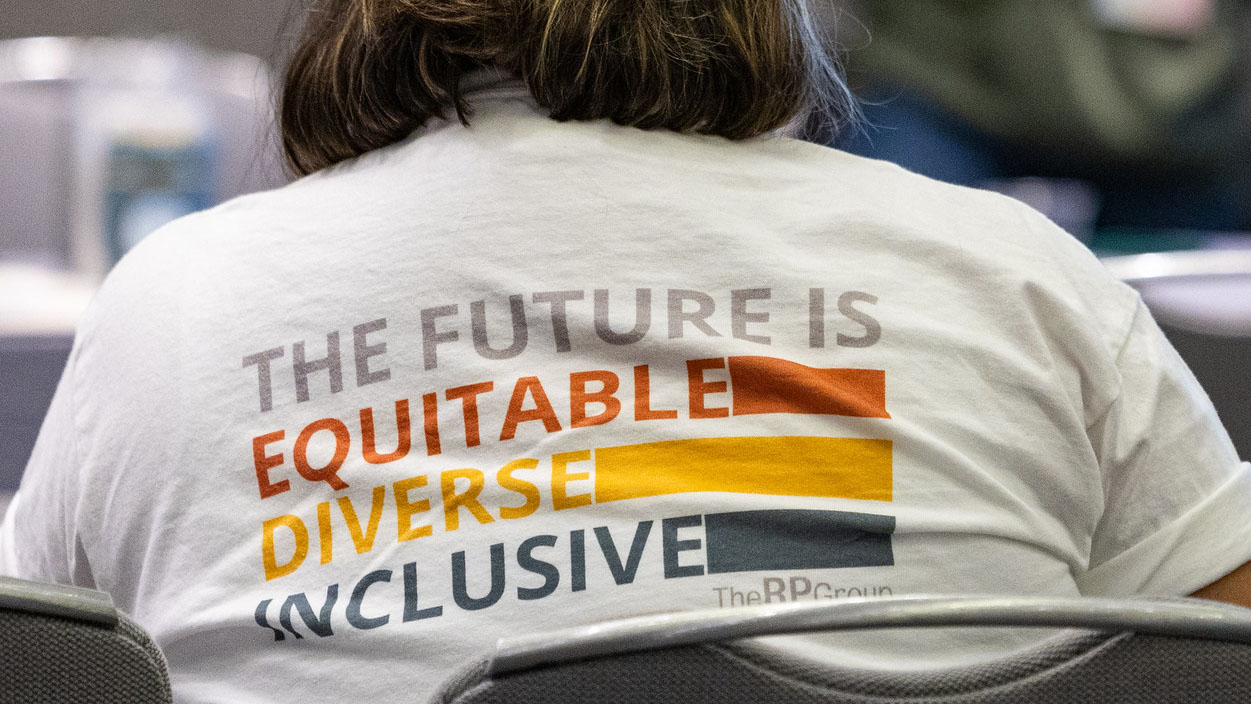
Conceptual Framework for Advancing Equity

As an organization, we are undergoing significant Board and staff development around equity, diversity, and inclusion; and we will continue changing how we offer professional development opportunities to ensure we are meeting our commitment.

We have created a conceptual framework to guide these choices based on these four components: Equity-Minded, Cultural Humility, Evidence-Based, and Distributive Leadership.

RP_Group_EquityFramework_terms

Equity-Minded

Equity-Minded is a perspective or lens underpinning the operations of the organization that centers on recognizing and redressing systems of oppression in its policies, practices, and actions. This underpinning includes self-reflection, examining and prioritizing who is/has been most directly impacted, and interrogating the status quo to ensure equity is at the forefront of the work. 

To access resources in our Digital Library related to Equity-Mindedness, click here.

Cultural Humility

Cultural Humility is the ability to reflect critically upon and acknowledge our own biases, perspectives, shortcomings, as well as the limitations of our expertise is part of the process of learning and building the capacity to improve both our internal community and the communities we serve. Honoring the work, voice, perspectives, and experiences of those who interact with our organization and institutions across the state. 

To access resources in our Digital Library related to Cultural Humility, click here.

Evidence-Based

Evidence-Based is a commitment to collecting and analyzing data from multiple sources and perspectives to identify problems as well as solutions; recognizing that something does not work unless it works for all; and integrating both quantitative and qualitative analyses to provide necessary context/perspective. 

To access resources in our Digital Library related to Evidence-Based, click here.

Distributive Leadership

Distributive Leadership is an equity-minded approach to leadership that represents a collective commitment to lead and implement change, unified by a shared vision. It welcomes a variety of perspectives and leadership potential, and is not limited to one person or position, ensuring those impacted by implementing the vision are valued, included, and empowered to implement change within their roles. 

To access resources in our Digital Library related to Distributive Leadership, click here.

Equity, Diversity, and Inclusion Committee

Following the publication of our Code of Ethics in 2021, the Board of Directors of The RP Group focused on prominently centering equity, diversity, and inclusion within our work. While equity has been a core value and part of our work for quite some time, much like each of you and our college communities, our understanding of what it means to be equitable has evolved over time.

Purpose

The Equity, Diversity, and Inclusion (EDI) Committee guides and holds the organization accountable to integrate equity, diversity, antiracism, and inclusion principles and practices into the organization’s cultural norms and all aspects of the work of the RP Group. The EDI Committee stays current with best practices in equity, diversity, and inclusion in order to provide continuous review and ensure The RP Group's practices and structure are in alignment with our values and code of ethics. The committee makes recommendations to the Board on how The RP Group can serve as a conduit for colleges and practitioners to use research and planning to elevate courageous dialogue about systemic racism and inform meaningful change.

Vision

The EDI Committee envisions The RP Group as an organization where

  • Equity, antiracism, diversity, and inclusion are embedded and guide the research, planning, and professional development activities of the organization;

  • The RP Group is a change agent that empowers the IRPE community to lead and advocate for social justice within their respective institutions;

  • Research, planning, and professional development activities serve to raise minoritized student voices in the redesign of colleges’ policies, practices, programs, and processes and to dismantle systematic barriers and injustices; and

  • Research, planning, and professional development activities lead to the creation of educational spaces on campuses where all students learn and thrive regardless of their status, background, and demographics.